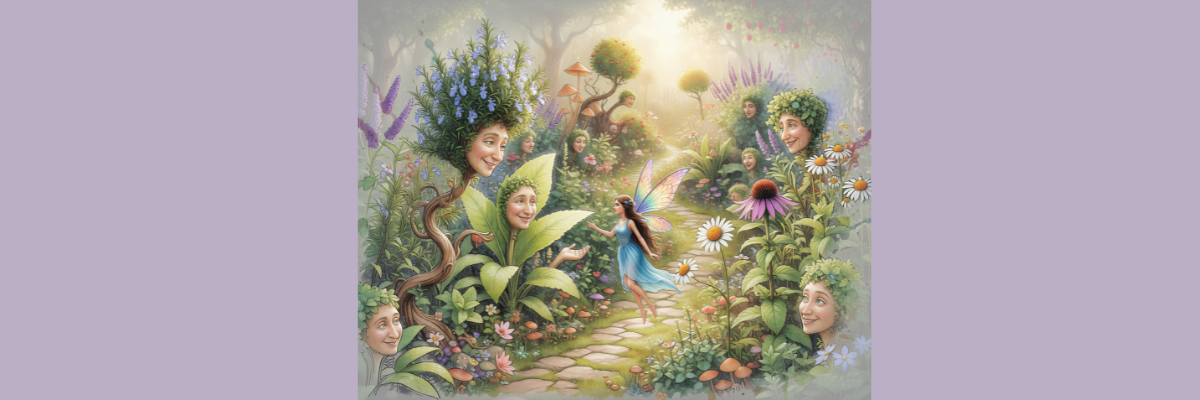
Archetypes & Mythic Identities
Since the dawn of civilisation, humans have looked to the plant kingdom not merely for sustenance and healing but for guidance, inspiration and spiritual communion. Across cultures and epochs, plants have been imbued with mythic significance, seen as divine emissaries, teachers and protectors. The lore of ancient healers, shamans and herbalists intertwines with the stories of gods, heroes and spirits, forging a bond between the botanical and the sacred. The Greeks crowned victors with laurel, the Egyptians embalmed their dead with frankincense and myrrh and the Celts whispered secrets to the oaks, knowing that within each leaf, root and petal lay a deeper truth. Just as humans embody archetypes, the Warrior, the Healer, the Mystic, so too do herbs express these qualities in their actions, energies and histories.
When we engage with plants on this level, we step into an age-old dialogue, one where nature speaks through symbols, sensations and stories, inviting us to see the living world as a reflection of our own inner landscape. By attuning to the personality of each herb, we deepen our understanding of its essence and its role in our lives. Below are some examples of bestowing mythic status to our herbal allies.
Ginseng – The Warrior
Ginseng stands as the embodiment of the Warrior archetype; strong, enduring and ever resilient. It is the root of vitality, fortifying the body against stress, increasing endurance and sharpening mental clarity. Used in ancient times by soldiers and travellers, ginseng’s adaptogenic power bolsters the spirit in times of hardship. Like the mythic warrior who thrives in adversity, ginseng teaches perseverance, focus and the art of conserving energy for when it is needed most.
Lavender – The Healer
Lavender carries the gentle yet profound energy of the Healer, the wise presence that soothes, restores and harmonises. From ancient Greece to medieval Europe, it has been used to cleanse spaces, calm the mind and mend wounds. Like the archetypal healer who offers sanctuary and peace, lavender brings comfort to the weary, quiets turbulent emotions and restores balance where there is discord.
Mugwort – The Mystic
Mugwort is the guide to the unseen, the herb of dreams, visions and liminality. Used by seers and shamans, it awakens intuition and sharpens inner sight. Like the Mystic who treads the path of the unknown, mugwort dissolves illusions, opens portals to deeper consciousness and strengthens the connection between the physical and ethereal realms. It murmurs secrets of the subconscious and lights the way through the shadowy corridors of the psyche.
Rose – The Lover
With its intoxicating fragrance and silken petals, rose embodies the Lover; a being of beauty, passion and devotion. Associated with Venus, the goddess of love, rose opens the heart, deepens emotional expression and reminds us of the sacredness of desire. Yet, like love itself, it is not without its thorns. Rose teaches us that vulnerability and strength are intertwined, that to love fully is to embrace both the pleasure and the pain of the human experience.
Thyme – The Guardian
In ancient times, warriors bathed in thyme to gain courage before battle, and homes were adorned with its sprigs for protection. Thyme is the Guardian, offering both physical and energetic shielding. Antimicrobial, purifying and strengthening, it dispels negativity, clears stagnant energy and safeguards vitality. Like a devoted sentinel, thyme watches over the body and spirit, ensuring that neither is left defenceless.
Dandelion – The Rebel
Dandelion defies convention. It grows where it is least wanted, thrives in adversity and refuses to be tamed. It is the Rebel, the trickster that challenges systems, breaks boundaries and reclaims forgotten wisdom. Despite being dismissed as a weed, dandelion is rich in medicine, nourishing the liver, strengthening digestion and teaching us the value of resilience. It reminds us to embrace our wildness and recognise power in what others overlook.
Cinnamon – The Alchemist
Warm, transformative and magnetic, cinnamon is the Alchemist; a herb that turns the mundane into the extraordinary. Its fiery nature stimulates circulation, awakens the senses and stirs passion. Used in potions, spells and sacred rites, cinnamon quickens the pulse of manifestation, helping dreams crystallise into reality. Like the great alchemists of old, it teaches that transformation begins from within and that fire, when wielded wisely, creates rather than destroys.
Ashwagandha – The Resilient Sage
Ashwagandha embodies the Sage, steady, grounded and endlessly wise. It offers strength in times of depletion, balancing stress and rebuilding vitality. Like an ancient teacher who guides with a gentle hand, it nourishes the nervous system, strengthens the body and fortifies the spirit against life’s storms.
Brahmi – The Enlightened Scholar
Brahmi is the Scholar, a master of intellect, clarity and spiritual awakening. Used in Ayurveda to enhance cognition, it sharpens memory, clears mental fog and supports deep meditation. Like a sage immersed in contemplation, brahmi illuminates the mind’s vast potential and fosters inner wisdom.
Calendula – The Light Bearer
Calendula glows with the energy of the Sun and embodies the Healer who mends both body and spirit. It soothes inflammation, encourages regeneration and brings warmth where there is coldness. Like a nurturing presence that brightens even the darkest days, calendula spreads light and renewal.
Elderberry – The Wise Crone
Elderberry is the Crone, the ancient healer who carries deep ancestral wisdom. Strong in protection and potent in defence, it shields against illness, strengthens immunity and wards off malevolent forces. Like an elder uttering remedies through the ages, elderberry reminds us that true strength lies in knowledge and preparation.
Rosemary – The Memory Keeper
Rosemary is the Seer, the one who remembers. Used in rituals to honour ancestors and in medicine to sharpen memory, rosemary is the guardian of wisdom, ensuring that nothing is lost to time. It reminds us that knowledge, once gained, must be preserved and passed on.
Gotu Kola – The Ascetic
Gotu kola is the Ascetic, the silent monk sitting in meditation by a lotus pond. Revered for its ability to enhance meditation and calm the nervous system, it allows the mind to transcend the mundane and enter realms of heightened perception and serenity.
Ginger – The Igniting Initiator
Ginger is the Spark, the Catalyst and the initiator of movement. Its heat ignites digestion, boosts circulation and fuels the inner fire of vitality. Like a passionate force that refuses to be subdued, ginger propels action, ensuring that stagnation is left behind.
Ginkgo – The Time Traveller
Ginkgo is the Keeper of Time, an ancient witness to the Earth’s transformations. One of the oldest tree species, it enhances circulation to the brain, supports memory and embodies endurance. Like a being who has watched centuries pass, ginkgo holds the essence of longevity and continuity.
Milk Thistle – The Purifier
Milk thistle is the Detoxifier, cleansing the liver and fortifying the body’s defences. It is the guardian of internal sanctity, ensuring that toxins, both physical and emotional, are transformed and released, leaving space for renewal.
Yarrow – The Wounded Warrior
Yarrow is both warrior and healer. Used for centuries to staunch wounds, it symbolises resilience in battle. Like a warrior who knows both injury and recovery, yarrow teaches that true strength lies not just in fighting but also in the ability to mend. Yarrow coaxes us to face old wounds bravely.
Herbs as Living Entities
By approaching herbs as living entities with archetypal identities, we engage in a deeper, more intuitive relationship with plant medicine. Ginseng is not merely an adaptogen; it is a warrior’s ally. Mugwort is not just a dream herb; it is a mystic’s lantern. As we honour these archetypal roles, we learn to see herbalism not only as science but also as a dialogue, one in which the plants speak their wisdom and we, as seekers, listen.
Mythic associations help us remember the essence of each herb in a way that is vivid and visceral. A scientific list of properties may tell us what an herb does, but a mythic identity shows us who it is. This allows us to intuitively reach for the right plant at the right time, much like calling upon an old friend or mentor. These archetypes also deepen our personal engagement with healing, transforming it from a clinical process into a soulful journey. By learning the stories woven into these plants, we begin to see them as allies, offering their unique strengths to support our physical, emotional and spiritual well-being. In this way, herbalism becomes not just a practice, but also a sacred art of connection and remembrance.
Making Mythic Moments with Herbs
We honour a plant by inviting it into our daily lives with intention and reverence. Placing a branch, flower or leaf on an altar acknowledges its presence as a guide, a reminder of its wisdom woven into our space. Carrying it with us, tucked into a pocket, worn as an amulet or simply inhaling its scent throughout the day, creates a quiet dialogue, a way of attuning to its essence beyond words. Drinking it as tea or tincture allows its medicine to move through us, not only nourishing the body but also imprinting its character upon our awareness. In this way, the plant’s myth or archetype remains alive, not as a relic of old stories, but as something actively shaping our experience. Just as a familiar landscape deepens in meaning the more we walk its paths, a plant’s presence becomes clearer the more we engage with it. Over time, its qualities reveal themselves in subtle ways: the resilience of yarrow, the clarity of rosemary and the grounding strength of ashwagandha. To know a plant is to carry its story within us, letting it inform our actions, our healing and our understanding of the world.