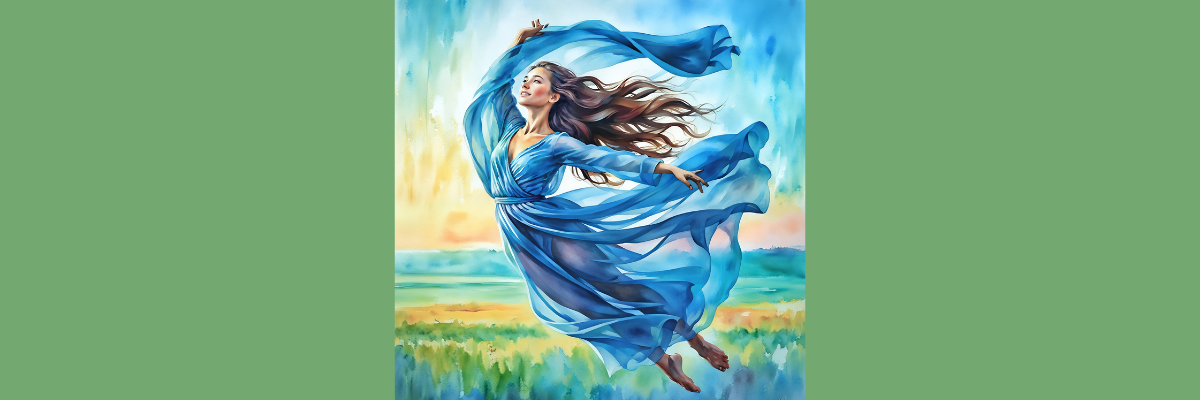
Where Certainty Falls Away
There is a point in healing where the familiar scaffolding collapses. Old explanations no longer suffice and symptoms behave unpredictably. The body feels unreliable; emotions rise without invitation and identity loosens. This is the liminal zone, a threshold state where what we were no longer functions and what we are becoming has not yet taken shape.
Most people recognise this phase even if they do not have language for it. It is the moment of being dismantled while still fully conscious. We are not ill in the way we once were yet we are not well either. We hover between versions of ourselves. This is not a failure of healing; it is the work itself.
Disintegration Is Not Disorder
In this zone the body often behaves strangely. Random pains flare then vanish, old injuries ache and forgotten grief resurfaces. Habits that once numbed discomfort stop working and the nervous system feels exposed. These experiences can feel chaotic but they are rarely random.
What is occurring is dissolution. The organism is letting go of patterns that once ensured survival but now impede wholeness. This includes physical compensation patterns, emotional defences, biochemical dependencies and deeply held beliefs about control and worth. Disintegration feels frightening because it removes predictability. Yet no genuine reorganisation occurs without a phase of breakdown. The body is not betraying us; it is renegotiating its terms.
Time Distortion and Nervous System Signals
One striking and recognisable feature of this phase is altered time perception. Healing here feels slow while urgency feels immense. Days stretch and progress seems invisible; this is often where despair creeps in. The absence of visible movement does not indicate stagnation. Reorganisation happens beneath awareness. Cells, neural pathways and endocrine rhythms do not obey human impatience.
This phase often coincides with a shift from sympathetic dominance to parasympathetic re-engagement. Old memories arise unbidden and sensations feel raw. Safety must be re-established before higher order healing can stabilise. Awareness of these processes reassures us that apparent chaos is intelligence at work, not failure.
The Great Temptation of the Quick Fix
This is the point where many retreat. The discomfort intensifies just as the old ways of managing it fall apart. A quick fix promises relief without reckoning and offers certainty where uncertainty reigns. Modern culture reinforces this reflex. We are taught to suppress symptoms not to listen to them, to override signals rather than interpret them and to outsource responsibility rather than inhabit it.
Yet bypassing this phase does not resolve it, it merely postpones it. The liminal zone has patience. If not entered consciously it will be revisited repeatedly and often with increasing insistence.
Many struggle here not just because of pain but also because of identity loss. The “person who coped,” the “strong one,” the “productive one” may no longer function. Naming this as grief rather than failure allows compassion to enter and reassures us that we are doing meaningful work even when it feels uncomfortable.
Responsibility Without Blame
One of the most confronting aspects of this threshold is the return of agency. Not blame but responsibility. We begin to see how our choices, patterns and omissions have shaped the terrain we now inhabit.
This can sting. It is easier to feel wronged than accountable. Yet responsibility is not a moral burden, it is leverage. It is the recognition that change is possible because participation is possible. At this stage healing becomes less about being fixed and more about becoming involved. Attention replaces avoidance and honesty replaces strategy. We stop asking for rescue and begin asking better questions.
Doing Nothing and Doing Everything
The liminal zone requires presence without interference. This is an active state. Attention itself becomes medicine. Witnessing without forcing resolution is itself transformative. A paradox emerges here; should we act or surrender? Should we intervene or allow? The answer is not either, it is discernment. There are moments in the liminal zone where effort only tightens the knot. Where the most intelligent action is restraint: To stay present without forcing resolution, to let sensations move without interpretation and to allow fatigue, grief and uncertainty to be felt without narrative.
There are also moments where gentle structure is essential. Regular meals, simple herbal support, rhythms that reassure the nervous system, clear boundaries, honest conversations and small acts of care repeated consistently. This is not passivity. It is skilful participation.
The Vedic Lens: Dissolution as Intelligence
Vedic philosophy offers a precise framework for understanding this phase through the principle of the three cosmic functions: destruction, preservation and creation. Shiva dissolves what has outlived its usefulness, Vishnu sustains what is still viable and Brahma brings forth what is new.
In healing these forces are not sequential. They operate simultaneously. The liminal zone is dominated by Shiva’s work, where structures fall away and false stability collapses. This is not punishment; rather it is intelligence clearing space. Vishnu appears as the practices that hold us while this occurs; nourishment, rest, herbs, ritual and relationship. These do not propel transformation, they stabilise the field so that transformation can occur safely.
Brahma cannot act until the other two have done their work. Creation arises naturally when dissolution has been honoured and sustenance maintained. Trying to create a new way of being before dissolution has completed results in fragile outcomes. Waiting allows something more robust to take form.
Herbalism and the Threshold
Herbal medicine understands this zone intimately. Many of the most powerful herbs do not force outcomes. They modulate tone, restore communication and support adaptation. Bitters provoke digestion by reawakening relationship not by overpowering the system. Nervines soothe without sedation. Alteratives assist the body’s own intelligence rather than dictating direction.
Herbalism is uniquely suited to liminal healing because it respects timing. It recognises when to stimulate, when to calm, when to drain and when to nourish. It works with the body’s transitional states rather than attempting to erase them. In this way herbalism becomes less about treatment and more about accompaniment.
Crossing the Threshold
Emergence does not announce itself dramatically. One day symptoms ease without fanfare, reactions soften and choices feel less effortful. The body begins to trust again. What returns is not the old self restored but a reorganised one that is more responsive, less defended and better able to feel without collapsing or controlling.
This is the profound miracle of the liminal zone. It does not reward speed; it rewards presence. Those who cross it carry a different kind of strength. Not the rigidity of endurance but the suppleness of having been undone and reformed. They have learned that uncertainty is not an enemy and that darkness can be instructive. Healing does not require certainty; it requires willingness. The threshold remains open to those brave enough to stand within it long enough to change.