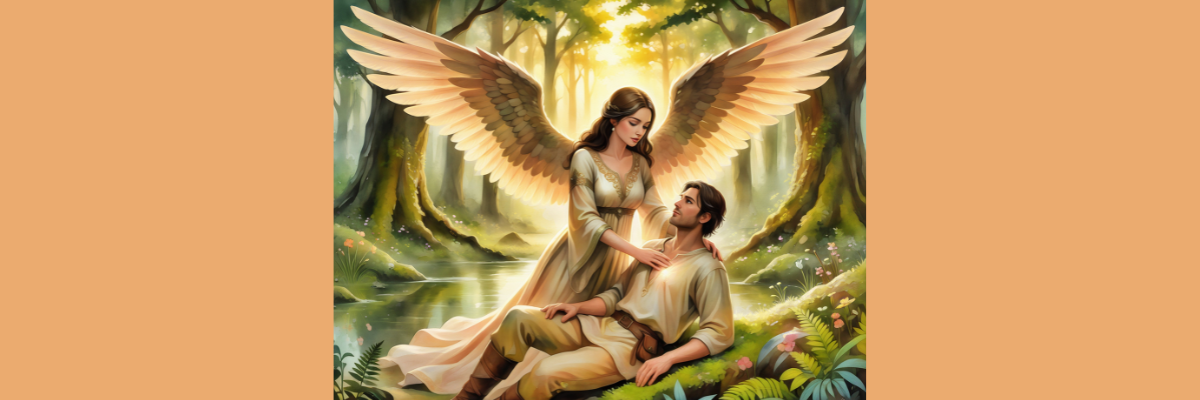
Our Wounds Are Gifts in Disguise
There is a discreet paradox written into the human body. The very places that break are the places that teach. The tissue that scars becomes stronger. The nerve that once screamed learns discernment. What we call a wound is rarely an ending; it is more often a summons.
Physiology itself tells this story without poetry. When skin is cut, the body does not simply repair it, it orchestrates an intelligent response. Platelets gather like messengers. Inflammation arrives not as an enemy but as a signal fire, calling resources to the site of damage. Fibroblasts weave new collagen, often denser than what existed before. Bone, when fractured, remodels and can emerge more resilient at the fault line. The body does not merely erase injury. It remembers it and adapts. Healing then, is not a return to innocence, it is a refinement. This principle extends far beyond flesh.
“In the depth of winter, I finally learned that within me there lay an invincible summer.” Albert Camus
The Nervous System Remembers What the Mind Forgets
Psychological and emotional wounds live in the nervous system long after the story surrounding them fades. Trauma is not stored as narrative. It is stored as tone, tension and vigilance. The body learns from threat, just as it learns from injury.
Modern neuroscience confirms what ancient systems of medicine intuited. The vagus nerve, our great communicator between brain and body, modulates our sense of safety and belonging. When wounded emotionally, its signalling shifts. Breath becomes shallow, digestion falters, immunity wanes and hormones tilt toward survival rather than repair. Yet this same plasticity that allows injury to imprint itself also allows transformation. Through repetition, presence, rhythm and support, the nervous system can relearn safety. This is where herbs enter not as blunt instruments, but as teachers.
Nervines like vervain, skullcap and lemon balm do not overpower the system, they listen to it. Adaptogens such as ashwagandha and rhodiola do not erase stress, they train the body in resilience. Bitter roots like milk thistle and dandelion remind digestion how to receive again. In this way, plants mirror the deeper arc of healing itself. They do not rush us back to whom we were, they guide us toward who we are becoming. They catalyse progressive evolution.
“Where you stumble, there lies your treasure.” Joseph Campbell
Vedic Wisdom and the Sacred Intelligence of Suffering
In Vedic philosophy, suffering is not moral failure; it is friction. It is the pressure through which Consciousness refines itself. The Bhagavad Gita does not promise freedom from pain; it promises freedom from bondage to pain.
Avidya, spiritual ignorance, is not lack of knowledge; it is mistaking the temporary for the permanent. Wounds pierce this illusion and interrupt momentum - they crack certainty. They humble the ego’s fantasy of control. In doing so, they create the conditions for vidya, true seeing.
Ayurveda understands this intimately. Disease is not random. It is a conversation between constitution, environment, action and awareness. Doshas move out of balance not to punish, but to signal. The body speaks first in whispers and if unheard, it speaks in symptoms. If still ignored, it speaks in suffering. Healing, then, is not eradication; it is relationship.
Chiron and the Wisdom of the Unhealed Place
No figure embodies this truth more precisely than Chiron, the wounded healer. Unlike other centaurs, Chiron was civilised, wise, a master of medicine, music and herbal lore. Trained by Apollo and Artemis, he became teacher to heroes, physicians and kings. Yet Chiron carried a wound that would not heal. Struck by a poisoned arrow, his injury was immortal, eternal and incurable. He could relieve the suffering of others, but not his own. In his mythology lies a profound teaching. Healing is not always about resolution; sometimes it is about transmission.
Chiron’s wound refined his compassion, his discernment and his capacity to guide others through pain without pretending to stand above it. In herbalism, this archetype is deeply familiar. The most potent healers are rarely untouched. They are often those who have listened long enough to their own bodies, endured chronic imbalance, or walked with illness until it revealed its intelligence. Plants, too, bear scars. Trees produce resins in response to injury; myrrh and frankincense are born of wounding. The very substances that heal inflammation, infection and grief are secretions formed when the plant has been pierced. Medicine, quite literally, emerges from injury.
“The wound is the place where the Light enters you.” Rumi
Energetic Wounds and the Alchemy of Attention
On an energetic level, wounds are places where attention has collapsed or become fixated. They are sites of contraction in the subtle body. In yogic anatomy, unresolved wounds often correspond with congested nadis or imbalanced chakras. Grief lodges in the chest, fear grips the gut, unexpressed truth tightens the throat.
Herbs act here with remarkable elegance. Rose opens what has closed in sorrow. Hawthorn strengthens the heart not only as muscle, but also as emotional organ. Blue lotus soothes the overstimulated mind and invites spaciousness. These are not metaphors. These are lived physiological and energetic effects, measurable and experiential.
When paired with conscious ritual, breath and intention, plants help transmute wounds from points of collapse into points of power.
“Healing does not mean the damage never existed. It means the damage no longer controls our lives.” Akshay Dubey
The Gift Hidden in the Break
A wound is a threshold; it is where the old strategy fails, where identity cracks, where arrogance softens into humility and where the body demands a new conversation. To heal is not to erase the wound, but to integrate its wisdom. Scar tissue is not weakness; it is evidence of survival and adaptation. Likewise, emotional and spiritual scars can become places of depth, empathy and authority when they are met compassion and acceptance rather than resistance. In this sense, wounds do not diminish us; they carve us into vessels capable of holding more life.
The healer’s path, like Chiron’s, is not about perfection, it is about presence. It is about learning the language of pain well enough to translate it into understanding and understanding into care. Herbs remind us of this truth daily. They do not hurry, they respond. They work with what is, not against it. Perhaps that is the greatest gift hidden in our wounds; they slow us down enough to listen.