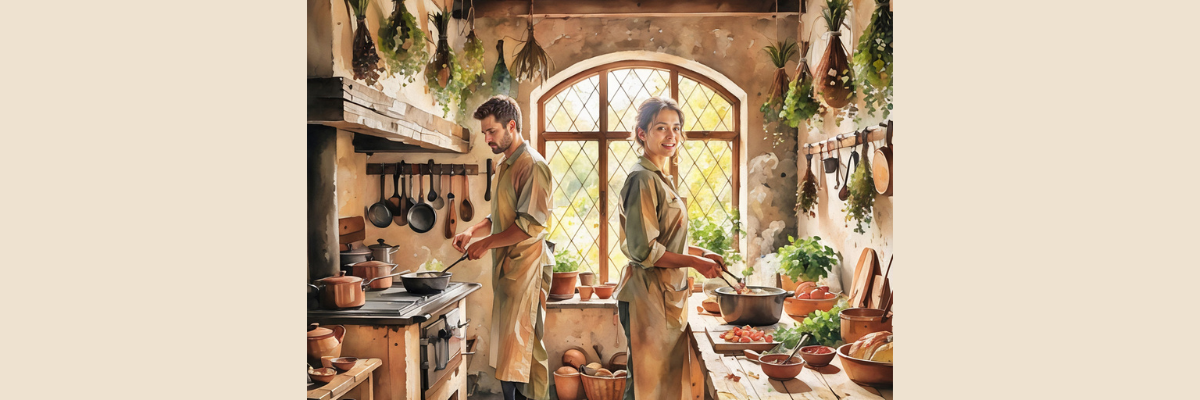
The Company Your Herbs Keep
Herbs are powerful allies, they work with the body’s innate intelligence to restore balance, repair damage and encourage vitality. But in Nature, plants rarely stand alone. They grow in communities, sharing nutrients, shelter and mutual protection. In the same way, herbs in our bodies thrive when surrounded by other supportive acts, choices and habits that enhance their effect.
A liver tonic will still work if you keep eating processed food, but its effect will be slower and less complete. A sleep herb may help you drift off, but not if you’re drinking caffeine all afternoon and scrolling your phone in bed. The truth is simple: herbs multiply their magic when the rest of life moves in the same direction.
The Healing Multiplier Effect
This principle rests on synergy, the way two or more supportive actions combine to create an effect greater than the sum of their parts. It also reflects terrain theory, the idea that the state of the body’s internal environment determines whether health or disease predominates. Herbs help improve the terrain, but so do food, rest, sunlight, movement and emotional wellbeing. When multiple supports work together, the healing force accelerates. Not only does your target symptom improve, but also unexpected benefits begin to appear; clearer skin, lighter moods, better digestion and sharper focus.
Supportive Acts by Category
Liver Tonics (dandelion root, burdock root, milk thistle)
Goal: Detoxification, regeneration, and metabolic balance.
Supportive acts:
- Avoid alcohol and limit refined sugar
- Reduce processed food, preservatives, and chemical additives
- Eat bitter greens and cruciferous vegetables
- Increase fibre for healthy elimination
- Stay hydrated with clean water
- Support gut health to reduce toxin reabsorption
- Get daily movement to aid circulation and lymphatic flow
- Avoid unnecessary medications and chemicals
Adaptogens & Stress Herbs (ashwagandha, rhodiola, ginseng, brahmi)
Goal: Increase resilience to stress, balance hormones, restore energy.
Supportive acts:
- Prioritise 7–9 hours of quality sleep
- Reduce stimulants like caffeine and nicotine
- Practice daily breath-work, meditation, or gentle yoga
- Eat balanced meals to avoid blood sugar swings
- Create tech-free breaks in your day
- Spend time outdoors in fresh air and sunlight
- Address unresolved emotional stress
Joint & Musculoskeletal Support (turmeric, frankincense, nettle, cat’s claw)
Goal: Reduce inflammation, improve mobility, ease pain.
Supportive acts:
- Maintain a healthy body weight
- Eat anti-inflammatory foods (omega-3s, colourful vegetables)
- Reduce refined sugars, alcohol, and processed oils
- Engage in gentle, regular exercise
- Stretch and maintain flexibility
- Support muscle tone to protect joints
- Stay hydrated for cartilage lubrication
Digestive Bitters & Carminatives (ginger, chamomile, fennel, peppermint)
Goal: Improve digestion, absorption, and gut health.
Supportive acts:
- Eat slowly and chew thoroughly
- Avoid overeating and late-night meals
- Support gut microbiome with prebiotic and probiotic foods
- Reduce ultra-processed foods
- Manage stress to avoid nervous system shutdown of digestion
- Drink water between meals, not during
- Keep regular meal times for digestive rhythm
Circulatory Tonics (Rosemary, ginkgo, cayenne, gotu kola)
Goal: Improve blood flow, oxygen delivery, and heart function.
Supportive acts:
- Engage in daily cardiovascular exercise
- Avoid smoking
- Eat antioxidant-rich fruits and vegetables
- Manage cholesterol and blood pressure naturally
- Reduce stress to avoid vasoconstriction
- Maintain healthy hydration
Lung & Respiratory Tonics (mullein, thyme, elecampane, liquorice)
Goal: Strengthen lungs, clear mucus, improve oxygen exchange.
Supportive acts:
- Avoid smoking and pollutant exposure
- Practice deep breathing exercises
- Maintain good posture for full lung expansion
- Spend time in fresh, clean air
- Stay hydrated to keep mucus thin
- Support immune system to reduce infections
Nervines & Sleep Herbs (valerian, passionflower, skullcap, lemon balm)
Goal: Calm the nervous system, improve sleep quality.
Supportive acts:
- Keep a consistent bedtime routine
- Reduce screen time before bed
- Limit caffeine after midday
- Create a cool, dark, quiet sleep environment
- Journal or meditate before bed to release mental chatter
- Eat a light evening meal
Immune Modulators (echinacea, elderberry, reishi, chaga, bayberry)
Goal: Strengthen immune defence, reduce susceptibility to illness.
Supportive acts:
- Get adequate sleep to support immune repair
- Eat a nutrient-dense diet high in vitamins A, C, D, and zinc
- Stay physically active
- Reduce chronic stress
- Maintain good hygiene and hand-washing
- Stay hydrated
Hormone-Balancing Herbs (Chaste tree, maca, ashwagandha, saw palmetto)
Goal: Regulate hormonal cycles and endocrine function.
Supportive acts:
- Eat whole foods rich in healthy fats for hormone production
- Avoid endocrine-disrupting chemicals (plastics, pesticides)
- Maintain a healthy weight
- Manage stress to avoid cortisol dominance
- Get regular exercise
- Support liver function for hormone clearance.
Skin & Lymphatic Herbs (chickweed, calendula, burdock, red clover)
Goal: Support detoxification, skin clarity, and lymph flow.
Supportive acts:
- Stay hydrated
- Eat a colourful plant-rich diet for antioxidants
- Avoid excessive processed sugar and fried foods
- Engage in daily movement to keep lymph moving
- Practice dry skin brushing
- Wear breathable fabrics and allow skin to sweat naturally
Creating Your Own Healing Ecosystem
Herbal healing is most effective when we build a supportive “ecosystem” around it, a personalised blend of diet, movement, rest, emotional care and environmental awareness. Start small. Choose one herbal ally and two or three lifestyle supports that make sense for you. As these habits become second nature, add more layers of support.
Closing Inspiration
Herbs are generous companions, carrying in their roots and leaves the memory of sunlight, rain and ancient earth. But they do not walk the healing path alone. They ask us to meet them in the middle, to clear the debris from our days, to breathe more deeply, to eat food that still hums with life, to rest when the body asks for it and to move when it longs to be strong.
When we weave these threads together, plant, person and daily choice, the tapestry of health grows rich and resilient. What begins as a simple act, a cup of tea or a drop of tincture, becomes the spark that wakes the whole body to its own remembering. This is where healing shifts from the mending of parts to the blossoming of the whole. And in that moment, you realise: it was never just about getting better. It was about learning to live as if you were already whole.